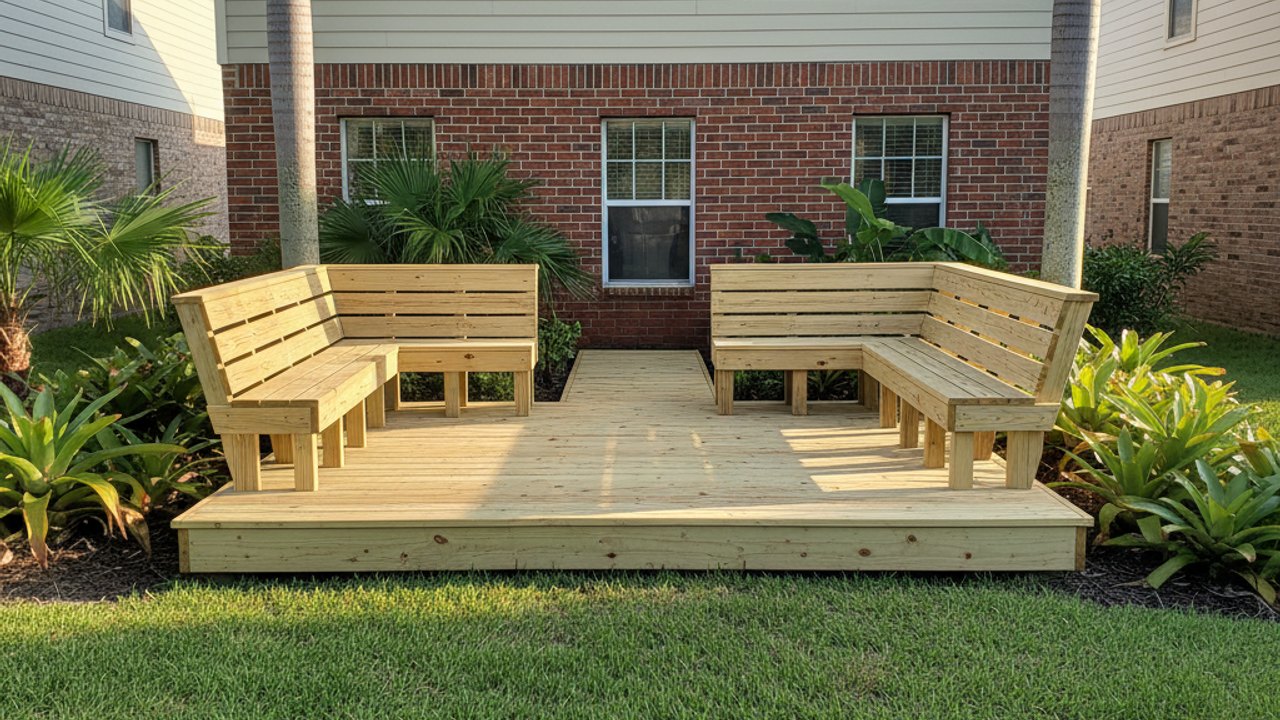
Davenport sits on sandy, well-draining Central Florida ridge soil, which is good news for footings. It's less good news for timing, because this part of the state runs on two seasons that matter a lot more to a deck than they do to most other home projects: a long hot wet stretch and a shorter dry one. Pick the wrong months and you're not just uncomfortable on a ladder, you're fighting the materials.
What the rainy season does to a job site
From June through September, Davenport gets afternoon thunderstorms most days, often right on schedule by 3 or 4pm. That's a problem for anything involving concrete footings. A footing needs a few days of steady cure before it's loaded, and pouring into a hole that fills with water, or getting rained on an hour after the pour, weakens the cure and can wash fines out of the mix. Pressure-treated lumber also soaks up ambient moisture fast in that humidity, which matters if boards are getting fastened and then expected to shrink evenly afterward. Framing built too wet can cup, twist, or pull nails as it dries out in the fall.
Composite decking cares less about rain itself, since the boards don't absorb water the way wood does, but installers still lose hours to storm delays, and nobody wants to be running a miter saw on a wet deck fifteen feet up during a lightning warning.
Hurricane season is a scheduling problem, not just a weather one
Hurricane season officially runs June 1 to November 30, and even a season with no direct hit for Polk County means tropical moisture, gusty outer bands, and the occasional named storm tracking close enough to shut a job down for a week. A deck under construction is exposed framing. It doesn't have the sheathing and fasteners a finished structure does, so a half-built frame sitting through a tropical storm is a real risk, not a theoretical one. Builders around here generally try not to leave a frame open and unrailed through peak months, which run roughly August through October.
Why late fall through winter is the better window
December through February in Davenport is mild, usually in the 50s and 60s, with much lower humidity than summer and far fewer surprise downpours. That's the best stretch for staining and sealing, because the sealant needs the wood dry and needs time to cure without rain hitting it. Most stain and sealant products want 48 to 72 hours of dry weather after application, and in July that's close to a coin flip. In January it's a safe bet most years. It's also a comfortable stretch to work in, which matters more than people think when a crew is on a steep pitched roof deck or doing detail work on railings for six hours at a stretch.
Cold snaps do happen, usually a handful of nights each winter dipping near or below freezing. That's not long enough or cold enough to cause the freeze-thaw damage you'd see further north, so it's rarely a real obstacle here, just something to plan around for a day or two.
Permits, inspections, and HOA timing
Deck work in Davenport typically goes through the City of Davenport or Polk County building department depending on the address, and most new decks need a permit regardless of season. Expect a footing inspection before concrete goes in and a final inspection once railings and stairs are complete. If the lot backs up to a pond or retention area, which is common in newer Davenport subdivisions, setback rules get checked against the survey before anything is approved. A lot of the newer communities around here, places like ChampionsGate, Solterra, and Providence, also run HOA architectural review on top of the county permit, which can add a couple of weeks before work even starts. Older streets closer to downtown Davenport usually skip the HOA step but may have an existing deck or pool deck built before current code, which sometimes means more repair work to bring railings and stair rise up to current standard.
None of that is seasonal, but it does mean the paperwork clock should start well before you want crews on-site. Submitting in late summer so the permit clears by the time the weather turns is a common and sensible move.
How this plays out by project type
- New deck installation or a full rebuild: best started in fall, after hurricane season winds down, so framing and footings aren't exposed through storm months.
- Composite decking installation: the least weather-sensitive job on this list, workable most of the year, though fall and winter are still more pleasant for the crew and for you if you're home while it happens.
- Staining and sealing, including resurfacing: winter, hands down, for the dry cure window.
- Repair work, board replacement, railing repair: can happen any time rot or storm damage shows up, no point waiting on a cracked stair tread or a railing post that's gone soft at the base.
- Screened-in decks and pergolas: better framed outside of peak storm months for the same exposure reasons as a new deck, since there's more structure up in the air before the roof or screen goes on.
None of this means summer work is off the table. Plenty of decks go in during a Florida July, and if a board's rotted through or a railing's failing, that's not a job that waits for better weather anyway. But if you've got the choice, late fall through winter gives a deck the best shot at curing right the first time, which matters more than almost anything else once the boards are down. If you're weighing timing against what the project actually needs, Western Deck Company can walk through what your site and your materials call for before you pick a start date.