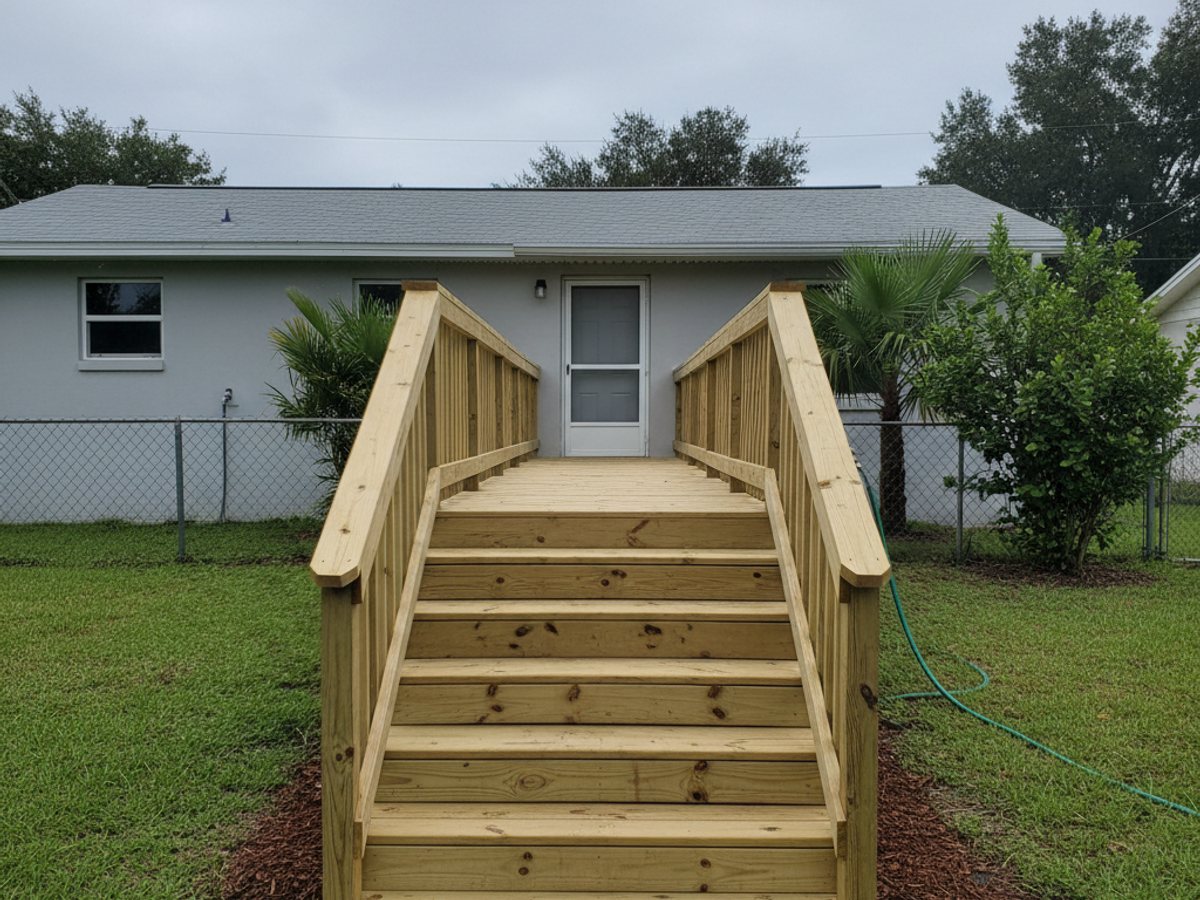
Davenport sits in the part of Polk County where lake front lots, old citrus land and brand new subdivisions all run into each other within a few miles. That mix matters more than most homeowners expect once you start digging footings or figuring out what a deck has to tie into. Here's what actually needs a look before a crew shows up.
What's under your yard
Most of Polk County sits on sandy soil that drains fast, which is good news when it rains hard in July and you don't want standing water under the joists. But get close to one of Davenport's lakes, Lake Davenport, Lake Marion, the chain around Posner Park, and the ground changes. Old lake bottom muck and clay pockets show up a foot or two down, and a concrete pier that would hold fine in dry sand can settle unevenly in that soil. A footing inspector is going to want to see bearing on solid ground, not on fill from when the lot was graded. On a lot like that, we'll sometimes go to helical piers instead of poured concrete, because they can be driven to refusal and you know exactly what they're sitting on.
Footing depth and diameter aren't guesswork either. Florida code typically calls for a minimum 12 inch diameter footing, sized up depending on how much deck it's carrying and how far the beam spans between posts. Skip that step and the deck might feel fine for a year or two, then start to rock at the rail when the ground around one post settles differently than the rest.
Wind, sun and six months of rain
This part of Florida is rated for 140 to 150 mph design wind speeds depending on the exact spot, which is higher than most of the country. That changes how a deck gets fastened to the house, not just how big the lumber is. Joist hangers and post bases need to be hurricane rated, and the ledger connection, where the deck ties into the house, carries uplift loads that a lot of older decks around here were never built for. If you're having an old deck repaired rather than replaced, that connection is worth checking even if nothing looks wrong on the surface.
Sun is its own problem. A stain or sealer that holds up two or three years in a shaded climate might need a recoat here in half that time, because UV in central Florida is relentless almost year round. June through September also brings near daily afternoon storms, so any wood decking needs gaps and grading that let water off fast. A deck that holds a puddle after a 20 minute downpour is a deck that's going to rot at the board ends first.
Permits, surveys and the HOA letter
Building a deck here almost always means a permit, whether through Polk County or the City of Davenport depending on where the lot sits. The inspector is going to want to see the footings before they're covered, and again at framing, and a final once railing and stairs are up. If your lot backs up to a lake or a drainage easement, expect a setback check against your survey before the permit even gets issued.
A lot of the newer communities out here, ChampionsGate, Solterra, Providence, run through an HOA architectural review on top of the county permit. Some of those HOAs are stricter about deck height, railing style and sightlines than the county is. That review can add a couple of weeks, so it's worth starting it early rather than after materials are already ordered.
What the deck actually gets built from
Pressure treated pine is still the most common decking material around here, partly because it's cheap and partly because Florida's termite pressure makes untreated lumber a bad bet. The chemical in modern treated lumber, ACQ, is more corrosive to plain steel than the old treatments were. Regular fasteners and joist hangers will rust and stain the wood within a season or two. Stainless or hot dip galvanized hardware costs more up front and is worth it every time.
Composite decking sidesteps a lot of that, since it won't rot and doesn't feed termites, but it still has to get proper joist spacing, real flashing at the ledger, and venting so moisture doesn't sit trapped against the house. Composite boards also expand and contract more than wood does in our heat swings, so the gapping at installation has to account for a 100 degree surface temperature in August, not just the air temperature.
What's already attached to your house
A big share of homes in the older part of Davenport and the surrounding towns are block construction, CMU with a stucco finish, rather than wood framed. That changes how a ledger board gets attached, since you can't just lag bolt into block the way you would into a wood rim joist. It usually means through bolting with proper anchors rated for the load, or in some cases building the deck freestanding so it isn't relying on the house wall at all. If a contractor hasn't asked whether your exterior wall is block or frame before quoting the job, that's worth asking about.
Older decks and porches around here, especially ones built before screened enclosures and pool cages became standard, sometimes have ledger boards attached with nothing but a few nails. Before any resurfacing or board replacement job, that connection is the first thing worth pulling back to check, because new boards on a bad frame just buys you a few more years before the same problem shows up again.
Ten things, and most of them come down to the same idea: what's under the deck and what it's bolted to matters more than what it looks like on top. That's the part worth getting right before the first board goes down. Western Deck Company handles that end of it, from the footings up.